
- →Employed groomers earn $25K–$45K/year; independent operators earn $45K–$85K+
- →Mobile groomers earn $90–$150 per dog — often more than salon groomers per day
- →Two no-shows/week at $75 = $7,800/year lost — deposit policies fix most of it
- →A $10 price increase across 1,200 appointments = $12,000 in additional annual revenue
- →The gap between $35K and $85K groomers is almost never skill — it is systems
- →Salon owners with staff can net $60K–$150K+ depending on team size and retention
You've done the math a dozen times on a napkin. If you do six dogs a day at $80 each, that's $480. Five days a week. Fifty weeks a year. That's $120,000 — right?
Except it never quite works out that way. There are cancellations, slow seasons, the dogs that take twice as long, the clients who ghost. And if you work for someone else, the split changes everything.
So what's the real dog groomer salary picture in 2026? Here's the real breakdown — by employment type, business model, location, and the habits that separate the top earners from everyone else.
TL;DR: Employed groomers earn $25,000–$45,000/year. Independent and mobile groomers earn $45,000–$85,000. Salon owners with strong systems can net $60,000–$150,000+. The gap between income levels is almost never about skill — it's about how well the business is run.
What the data says: average dog groomer salaries in 2026
The national average for an employed dog groomer in the United States falls between $30,000 and $45,000 per year. The Bureau of Labor Statistics places median wages for animal care and service workers around $31,000–$36,000 — but that average is dragged down by entry-level chain employees and skewed upward by experienced independent operators.
The range is wide. Here's a realistic breakdown by employment type:
| Employment type | Annual income range | Notes |
|---|---|---|
| Employed (corporate chain) | $25,000–$38,000 | Hourly + tips, limited upside |
| Employed (independent salon) | $28,000–$45,000 | Often commission-based |
| Booth rental groomer | $35,000–$65,000 | Depends on client volume |
| Mobile groomer | $45,000–$85,000 | Higher per-dog revenue, lower volume |
| Salon owner (solo) | $40,000–$90,000 | Widest range — depends on systems |
| Salon owner (with staff) | $60,000–$150,000+ | Scales with team size |

Employed groomers: stable but capped
Working for a chain or independent salon gives you predictability — and a ceiling. Most employed positions pay $13–$20 per hour, with tips pushing effective rates to $18–$28 for experienced groomers.
No matter how fast or skilled you are, your income is limited by your hours and your employer's pay structure. Lead groomer or salon manager promotions typically add $3–$6 per hour at most.
The upside: no business risk, no client acquisition, no admin overhead. For groomers still building skills, employment is often the right starting point — just go in knowing what the ceiling looks like.
Commission-based grooming: the most common independent model
Most non-chain salons pay on commission — typically 40–50% of the service price. At a 50% split on an $80 groom, you earn $40 per dog.
At 6 dogs per day, 5 days a week, that's $57,600 per year. Push to 8 dogs per day and you're looking at $76,800.
The math works — but only if you stay fully booked. Commission groomers who struggle with no-shows and cancellations work the same hours for significantly less. This is where automated reminders and deposit policies make a direct, measurable difference to take-home pay.
Mobile grooming: the highest per-dog revenue
Mobile groomers consistently earn more per appointment — typically $90–$150 per dog depending on size, breed, and location. The premium is justified: you come to the client, the dog is calmer, and the convenience commands a higher price.
The tradeoff is lower volume. Most mobile groomers do 4–6 dogs per day versus 6–10 in a salon. But the math often favors mobile:
- Salon groomer at $40/dog × 8 dogs = $320/day
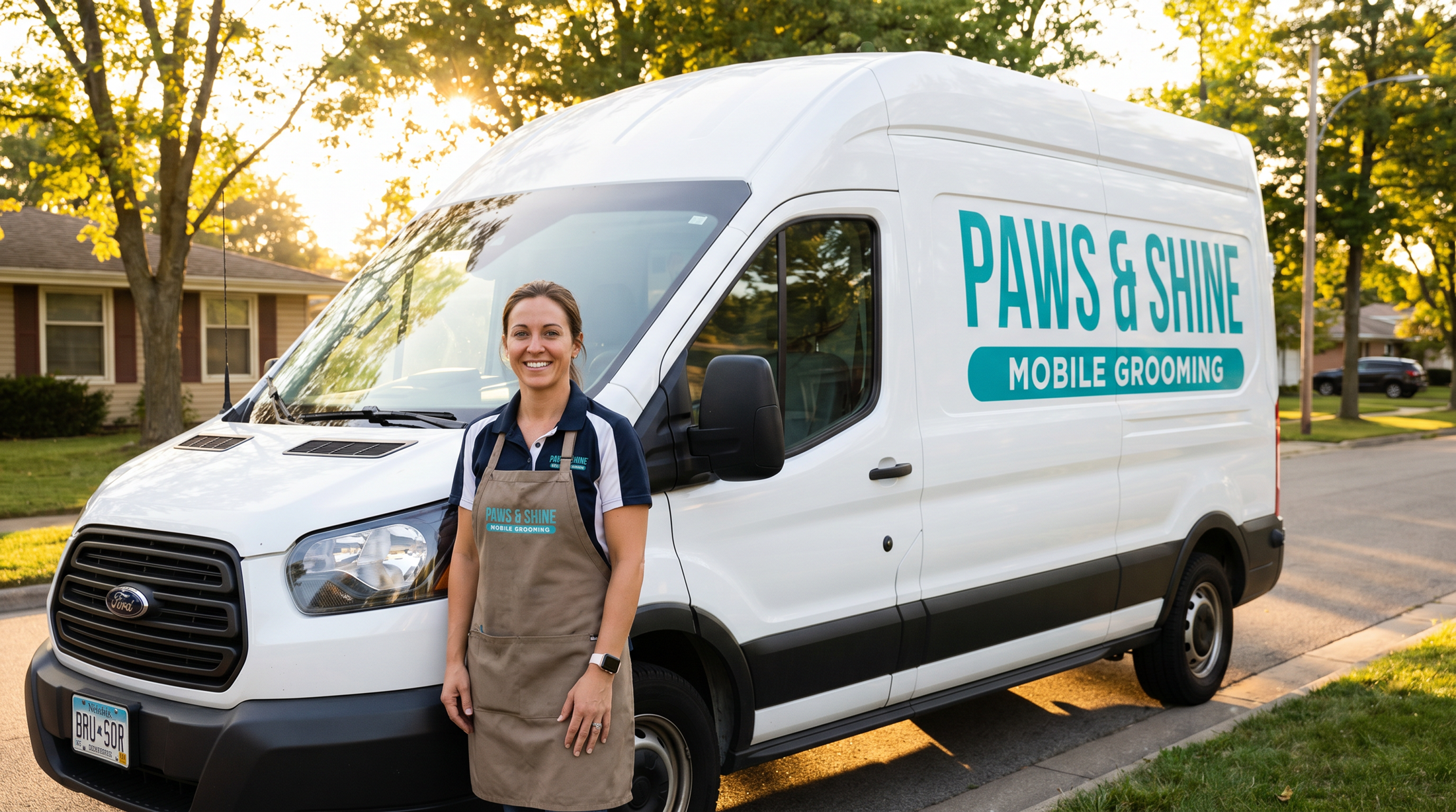
- Mobile groomer at $110/dog × 5 dogs = $550/day Experienced mobile groomers in high-cost markets — Los Angeles, New York, Miami, Seattle — regularly earn $80,000–$120,000 per year. The limiting factors are route efficiency, van maintenance, and keeping the schedule full.
Salon owners: the widest income range
Owning your own salon has the highest ceiling and the widest variance. A solo owner-operator running a tight shop can net $50,000–$90,000 after expenses. Add one or two employees and that range expands — but so does the complexity.
The difference between salon owners earning $45,000 and those earning $120,000 usually isn't skill or location. It's systems.
No-show rate. At $75 per appointment, two no-shows per week costs $7,800 per year. Owners who enforce deposit policies and send automated reminders recover most of that.
Rebooking rate. Clients who rebook at the appointment have 40–60% higher retention than those who are chased down later. Systematic follow-up is the difference.
Service mix. Add-ons — teeth brushing, de-shedding, nail grinding — cost $10–$25 and add 15–30 minutes. High-add-on salons earn significantly more per dog without adding appointments.
Visibility into the numbers. Owners who know their revenue per day, top services, cancellation rate, and new client growth make better decisions. Owners running on paper or spreadsheets often can't tell you which day of the week makes them the most money.
How location affects grooming income
Location moves the needle more than almost any other factor:
High-earning markets: New York, Los Angeles, San Francisco, Miami, Seattle, Boston, Chicago. Full grooms run $100–$180 for medium to large breeds. Mobile groomers in these markets regularly hit six figures.
Mid-range markets: Austin, Denver, Nashville, Phoenix, Atlanta, Dallas. Full grooms typically $65–$110. Lower cost of living often means better quality of life at similar income levels.
Lower-earning markets: Rural areas and small towns typically see full grooms at $45–$75. Volume and efficiency matter more. Owners who master the schedule and minimize downtime can still build strong businesses.
What actually separates $35,000 groomers from $85,000 groomers
The differentiating factors are consistent across income levels:
How full their schedule is. A groomer booked solid 5 days a week earns dramatically more than one with gaps and no-shows. This is almost entirely a systems problem — not a marketing problem.
Whether they raise prices. Many groomers haven't raised prices in years despite inflation and growing demand. A $10 price increase across 1,200 appointments per year is $12,000 in additional revenue. If you're unsure what the market supports, how to price your dog grooming services covers the full framework.
How many add-ons they sell. High earners consistently offer and sell add-on services. This requires a system for suggesting them — not just hoping clients ask.
Whether they retain clients or constantly acquire new ones. New client acquisition costs time and money. Repeat clients who rebook automatically are significantly more valuable. Retention is a function of experience, communication, and follow-up — all of which can be systematized.
How much time they lose to admin. Groomers spending 30–60 minutes per day on scheduling, reminders, and records have fewer productive hours. Those who automate admin have more time to groom — or more time for life outside the salon.
If you're still in the planning stage, [dog grooming business startup costs and how to set up your grooming business management system](/blog/dog-grooming-business-startup-costs) breaks down exactly what each model — home-based, mobile, and salon — costs to launch.
The honest income ceiling for independent groomers
Working alone, a skilled solo groomer in a decent market can realistically earn $60,000–$90,000 net if they stay fully booked and run their business well. Beyond that, you're either in a very high-cost market, adding staff, or diversifying into training or products.
The path to higher income isn't working faster or longer. It's working smarter: tighter scheduling, better retention, higher prices, more add-ons, and less time lost to no-shows and admin.
Every groomer who has made the jump from $40,000 to $70,000 says roughly the same thing: they stopped running their business on instinct and started running it on systems.
"I wasn't grooming fewer dogs — I was just losing less money between appointments. Once I fixed that, everything changed."
What this means for your grooming business
Whether you're employed and thinking about going independent, or already running your own salon and wondering why income isn't where you want it — the path forward is the same.
Know your numbers. Track appointments, no-show rate, add-on rate, and new client growth. Run your schedule tightly. Automate what can be automated. Reinvest time saved into more dogs or more life — whichever you need more of right now.
ZendPaw was built specifically for this: independent groomers who want to run a tighter, more profitable business without spending hours on admin. Deposit collection, automated reminders, client records, and real-time reports — in one place, starting at $39/month.
The income potential in this industry is real. The groomers hitting the top of those ranges aren't lucky. They're organized.
Frequently Asked Questions
How much do dog groomers make per hour? Employed groomers typically earn $13–$20 per hour base, with tips bringing effective rates to $18–$28. Independent and mobile groomers don't work on hourly rates — their income depends on dogs per day and pricing, which can translate to $30–$60+ per effective hour when fully booked.
Can dog groomers make $100,000 a year? Yes — but it requires the right model and market. Mobile groomers in high-cost cities and salon owners with staff are the most likely to hit six figures. Solo groomers in average markets typically cap out at $60,000–$90,000 before it becomes a staffing question.
How much do dog groomers make in tips? Tips vary significantly by market and clientele. Employed groomers at quality salons typically earn $10–$30 per dog in tips. In upscale urban markets, tips can add $15,000–$25,000 per year to base income.
Is dog grooming a profitable business? Yes, with the right systems. The most profitable grooming businesses combine consistent pricing, low no-show rates, strong retention, and add-on services. Profit margins of 30–50% are achievable for well-run independent salons.
How much do mobile dog groomers make compared to salon groomers? Mobile groomers typically earn more per dog ($90–$150 vs. $40–$80 per service) but see fewer dogs per day. Net income is often higher for experienced mobile groomers in strong markets, with many earning $70,000–$100,000+ annually.
What's the biggest factor in a dog groomer's income? How full their schedule stays — and how little revenue they lose to no-shows, cancellations, and admin time. Skill matters, but two groomers with identical skills can earn $40,000 apart based entirely on how well their business is organized.
Ready to stop managing your schedule on paper?
14-day free trial · Cancel anytime
Start My Free Trial →