- →Home-based grooming nets $66K–$85K/year with the lowest startup cost ($3K–$8K)
- →Mobile groomers earn 15–30% premium per appointment but net similar to home-based after van costs
- →Salon has the highest ceiling ($80K–$150K/year net) but requires 3–6 months of operating capital in reserve
- →The right model depends on your capital, lifestyle, and whether you want to build a career or a business
- →Switching models is normal — most successful salon owners started home-based or mobile first
You've decided you want to run a grooming business — but which grooming business model is right for you? Now comes the question that actually determines how your first three years go: which model do you choose?
Pick wrong and you're locked into overhead you can't sustain, or a ceiling you'll hit within a year. Pick right and you're building something that fits your life and your goals from day one.
TL;DR: The average cost of mobile grooming ($30K–$80K startup) is 4–10x higher than home-based ($3K–$8K), but mobile commands premium pricing. Salon has the highest income ceiling but requires real operating capital. All three models can generate strong income — what differs is the risk profile, daily demands, and how fast you can scale.
This isn't a "follow your passion" article. It's an honest breakdown of what each model costs, what it actually earns, and what it demands from you every single day.
The three models at a glance
Before diving into numbers, here's the honest summary of each path:
| Home-based | Mobile | Salon | |
|---|---|---|---|
| Startup cost | $3,000–$8,000 | $30,000–$80,000 | $15,000–$50,000+ |
| Monthly overhead | Low ($300–$800) | Medium ($1,250–$2,800) | High ($3,000–$8,000+) |
| Appointments/day | 4–8 | 6–10 | 8–20+ |
| Price per appointment | Market rate | Premium (+15–30%) | Market rate |
| Ceiling | You | You | Team |
| Flexibility | High | Medium | Low |
| Best for | Solo starters | Premium solo groomers | Growth-focused owners |
None of these is the "right" answer. The right answer depends on your capital, your lifestyle, and whether you want to build a business or build a career.
Home-based grooming: low overhead, real limits
Home-based grooming is how most independent groomers start — and for good reason. You're converting space you already own, keeping overhead near zero, and building a client list before committing to a lease or a van payment.
The income math:
A home-based groomer working 5 days a week, averaging 6 appointments at $65 each, grosses around $7,800/month. After supplies, insurance, software, and a modest marketing budget, net income typically lands between $5,500–$6,500/month — $66,000–$78,000 annually.
The ceiling is real, though. There are only so many appointments in a day when you're working alone in your home. Once you're fully booked, the only way to grow is to raise prices — which you should do, and regularly — or eventually transition to a different model. If you need a framework for that, how to price your dog grooming services covers the full pricing approach.
What makes home-based work:
- Minimal fixed costs mean you reach profitability fast
- No commute, no lease negotiation, no landlord
- Client relationships are intimate — many home-based groomers retain clients for years
- Low pressure to fill every slot from day one What makes home-based hard:
- Zoning restrictions in some areas — check local ordinances before investing
- Hard to separate work from home life
- Limited capacity growth
- Some clients perceive it as less "professional" (counter this with exceptional presentation)
"Everything I need is in one spot — I set up my space once and it just works. I didn't realize how much time I was wasting on scheduling until I had a system handling it for me."
Mobile grooming: premium pricing, premium pressure
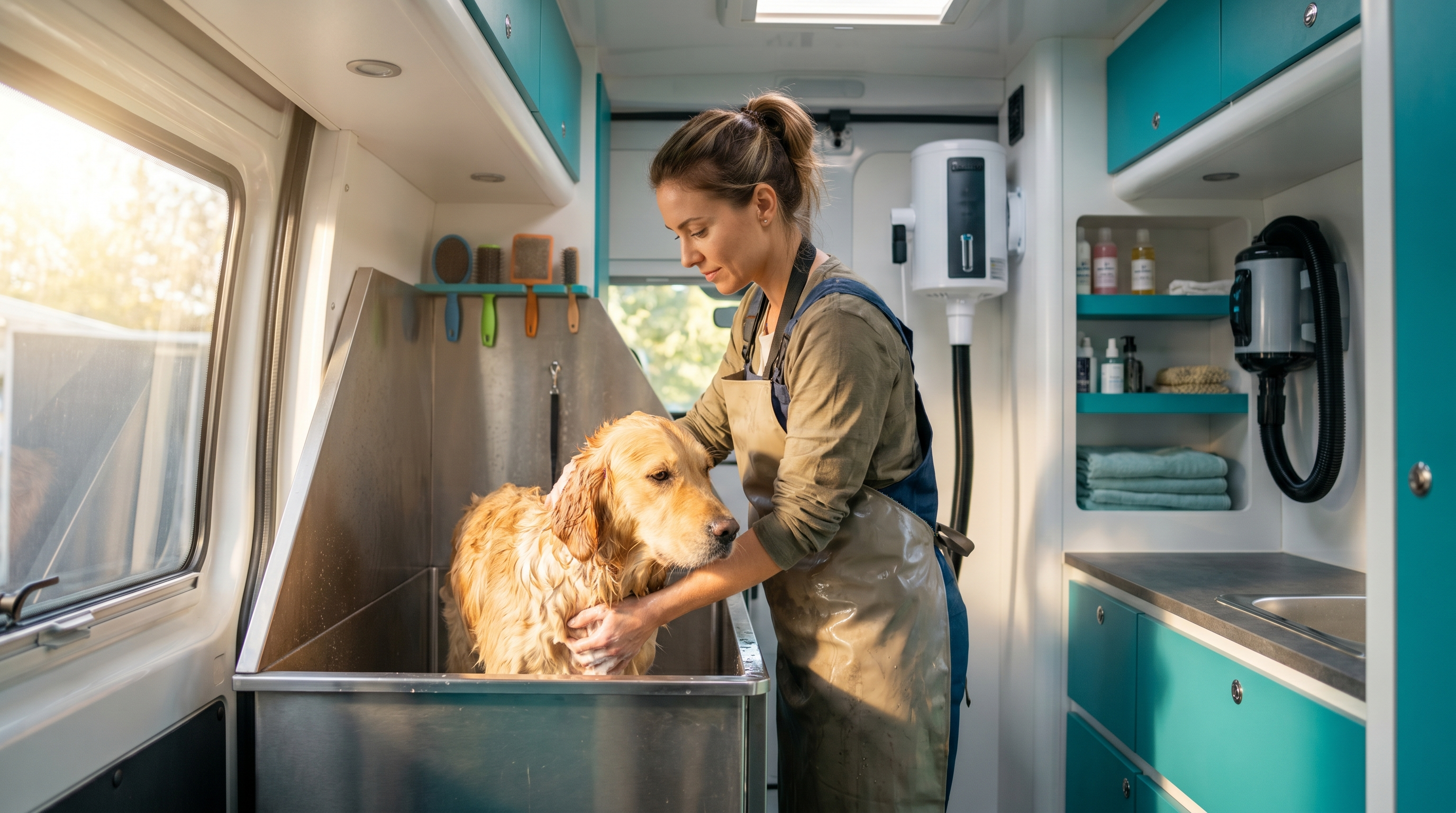
Mobile grooming has the highest per-appointment income potential of the three models. Clients pay a premium — typically 15–30% above salon rates — for the convenience of a groomer coming to them. No drop-off, no pick-up, no shared waiting area.
The tradeoff: mobile has the highest startup cost and the most demanding daily logistics.
The income math:
A mobile groomer doing 8 appointments per day at $85 average grosses around $8,160/week at full capacity. After van payment, fuel, insurance, maintenance, and supplies, a solo mobile groomer realistically nets $60,000–$90,000/year depending on volume, market, and efficiency.
The key word is efficiency. Route planning matters enormously. A poorly routed day can add 2 hours of drive time and cut your effective appointments from 8 to 5.
What makes mobile work:
- Highest per-appointment revenue of any model
- No facility lease — your overhead is the van
- Clients are loyal — the convenience factor keeps them coming back
- Premium positioning in the market What makes mobile hard:
- High entry cost ($30,000–$80,000 for a properly equipped van)
- Van breakdowns = lost income with no backup
- Physical wear — tight quarters, repetitive motion all day
- Weather dependency for some breeds and services
- No ability to serve multiple clients simultaneously The van is your business. Treat maintenance like payroll — set aside $200–$500/month regardless of whether something breaks, because eventually something will.
Salon grooming: the highest ceiling, the highest stakes
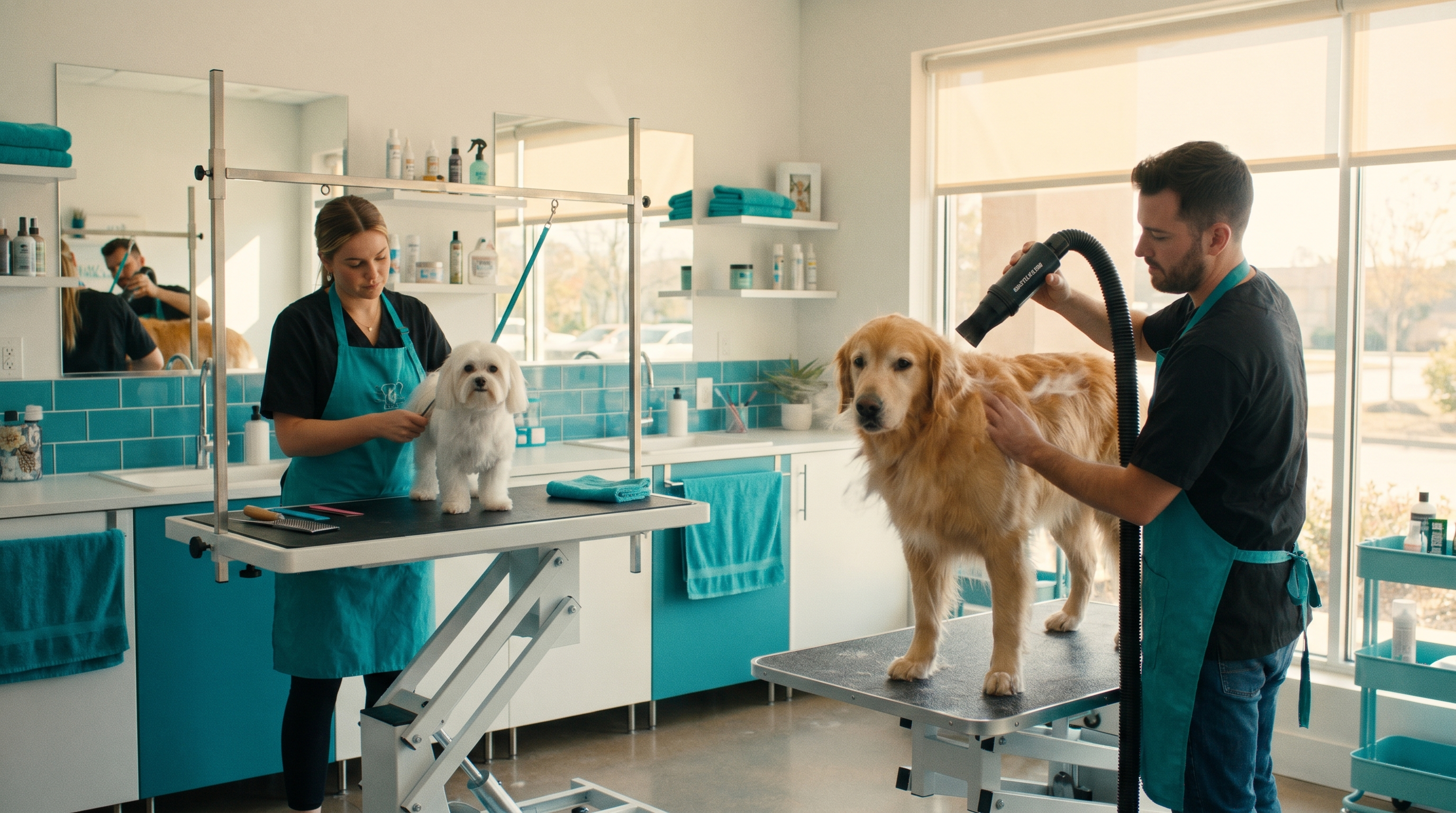
Opening a grooming salon is a fundamentally different business decision than the other two models. You're no longer just a groomer — you're an operator. Payroll, lease obligations, staff management, and client volume goals become your daily reality.
Done well, a salon has a ceiling the other models don't: you can serve more clients per day than one person can physically groom, because you have a team.
The income math:
A salon with 2 groomers and a bather running 18 appointments per day at $70 average grosses around $75,600/month at full capacity. After rent ($3,000), payroll (40–50% of revenue), supplies, insurance, software, and utilities, the owner-operator nets $8,000–$15,000/month — but only when the salon is running at or near capacity.
The danger zone is the ramp-up period. Most salons take 3–6 months to build a full client list. During that time, your rent and payroll don't pause. Working capital reserve is not optional — plan for 3–6 months of operating expenses in the bank before you open.
What makes salon work:
- Revenue scales with staff, not just your hands
- Established salons have strong client retention and referral networks
- The business has transferable value — you can eventually sell it
- You can specialize: breed-specific, cats-only, premium spa services What makes salon hard:
- Highest fixed costs — rent doesn't pause for slow months
- Staff management is a skill set most groomers never trained for
- One staff departure can significantly impact revenue
- Buildout costs and lease negotiations require business experience
Tracking who's booking, who's cancelling, and which services are carrying your revenue isn't optional at salon scale — it's how you manage the business. Having that data visible at a glance, updated in real time, changes how you make decisions.
Side-by-side: average cost and income by grooming model
| Model | Startup cost | Gross/year | Est. net/year | Required to hit this |
|---|---|---|---|---|
| Home-based | $3,000–$8,000 | $90,000–$120,000 | $66,000–$85,000 | 6 appts/day, 5 days/week, fully booked |
| Mobile | $30,000–$80,000 | $200,000–$390,000 | $60,000–$90,000 | 8 appts/day, 5 days/week, efficient routing |
| Salon (solo owner) | $15,000–$50,000+ | $300,000–$600,000 | $80,000–$150,000 | 2–3 groomers, near capacity, controlled overhead |
Notice that mobile has high gross but moderate net — overhead eats a significant portion. Salon has the highest ceiling but requires scale to reach it. Home-based has the best net margin of any model when fully booked.
For a detailed breakdown of what each model costs to launch — equipment, facility deposits, insurance, and the working capital reserve most new groomers forget — see dog grooming business startup costs by model.
How to choose the right model for where you are now
Start home-based if:
- You're new to running a business (not just grooming)
- You have limited startup capital
- You want to build a client list before committing to high overhead
- You value schedule flexibility above income ceiling Start mobile if:
- You have $30,000–$50,000 in startup capital or financing available
- You're already an experienced groomer with a client base
- You want premium pricing and direct client relationships
- You're comfortable with vehicle ownership and logistics Start a salon if:
- You have 3–6 months of operating expenses in reserve
- You have experience managing people or a strong co-operator
- Your local market can support the appointment volume you need
- You want to build something with team scale and eventual resale value There's no shame in starting home-based and building toward mobile or salon. Most successful salon owners started somewhere smaller. The goal isn't to skip steps — it's to move to the next model when the numbers support it. And when you're ready to raise prices as part of that growth, knowing how to do it without losing clients matters more than the timing.
Frequently Asked Questions
What is the average cost of mobile grooming compared to a salon? Mobile grooming typically costs 15–30% more per appointment than salon grooming because clients pay a convenience premium for at-home service. Startup costs are also significantly higher for mobile ($30K–$80K for an equipped van) versus a home-based setup ($3K–$8K).
Is mobile grooming more profitable than a salon? Mobile grooming has higher gross revenue per appointment, but a similar or lower net income than a well-run salon. Mobile overhead (van payment, fuel, maintenance) consumes more of your revenue than home-based, while salon income scales with staff size in a way solo mobile never can.
How much does it cost to start a home-based dog grooming business? Startup costs for home-based grooming typically run $3,000–$8,000, covering a grooming table, tub, dryer, clippers, and basic supplies. This is the lowest-cost entry point of all three models.
Can you make a living as a solo mobile groomer? Yes. A solo mobile groomer doing 8 appointments per day at market rates can net $60,000–$90,000 per year. The limiting factors are route efficiency, van reliability, and your ability to stay fully booked — not income potential.
Which grooming model has the highest income ceiling? Salon grooming has the highest ceiling because revenue scales with staff rather than with your individual hands. A well-run two-groomer salon can generate $80,000–$150,000 net annually for the owner — more than any solo operation. The tradeoff is higher fixed costs and management complexity.
The model doesn't determine your success — the execution does
Every grooming model has groomers making great money and groomers struggling. The difference isn't the van or the storefront — it's how the business is run.
That means knowing your numbers: cost per appointment, revenue by service, no-show rate, average client lifetime value. It means having systems that don't depend on your memory — appointment reminders that go out automatically, client history accessible in seconds, cancellation policies that protect your revenue without burning relationships.
The groomer who tracks their business runs a better business. Start your free ZendPaw trial and see what professional business management looks like from day one — whatever model you choose.
Ready to stop managing your schedule on paper?
14-day free trial · Cancel anytime
Start My Free Trial →